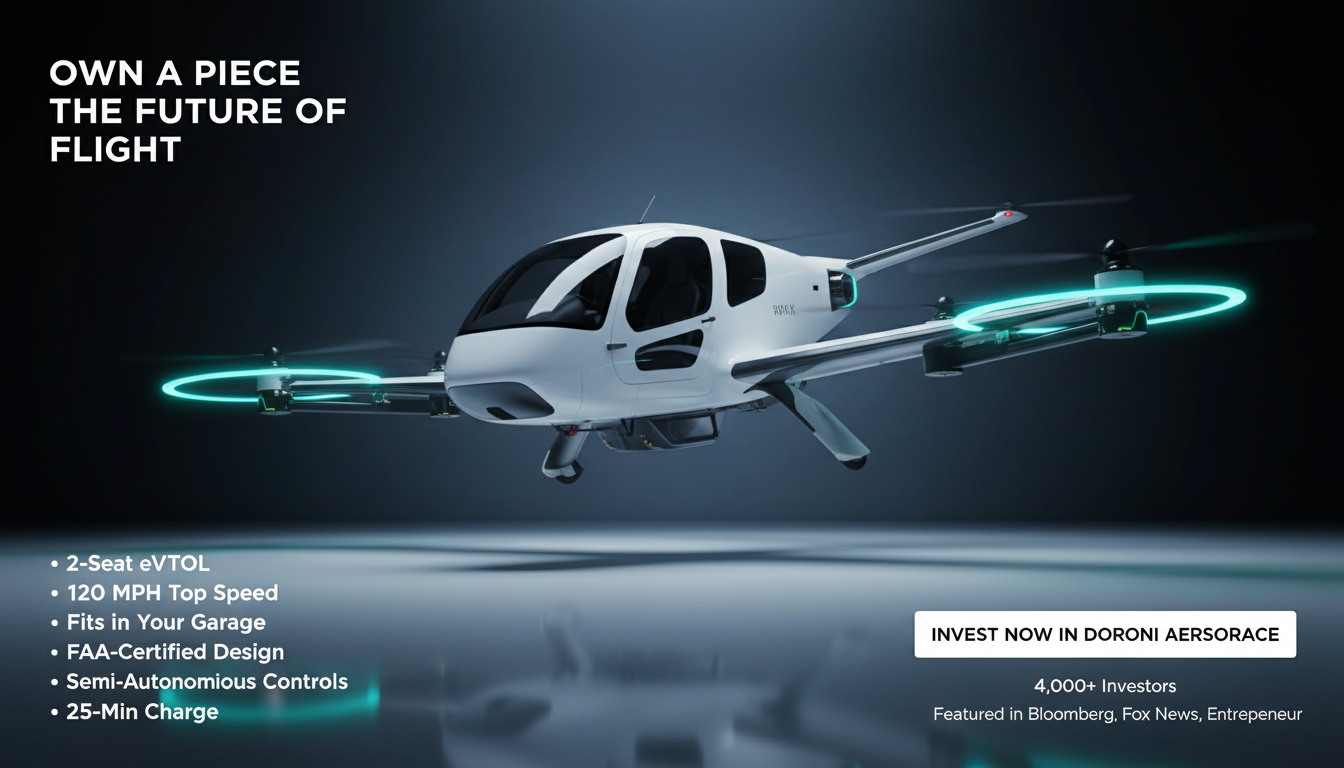
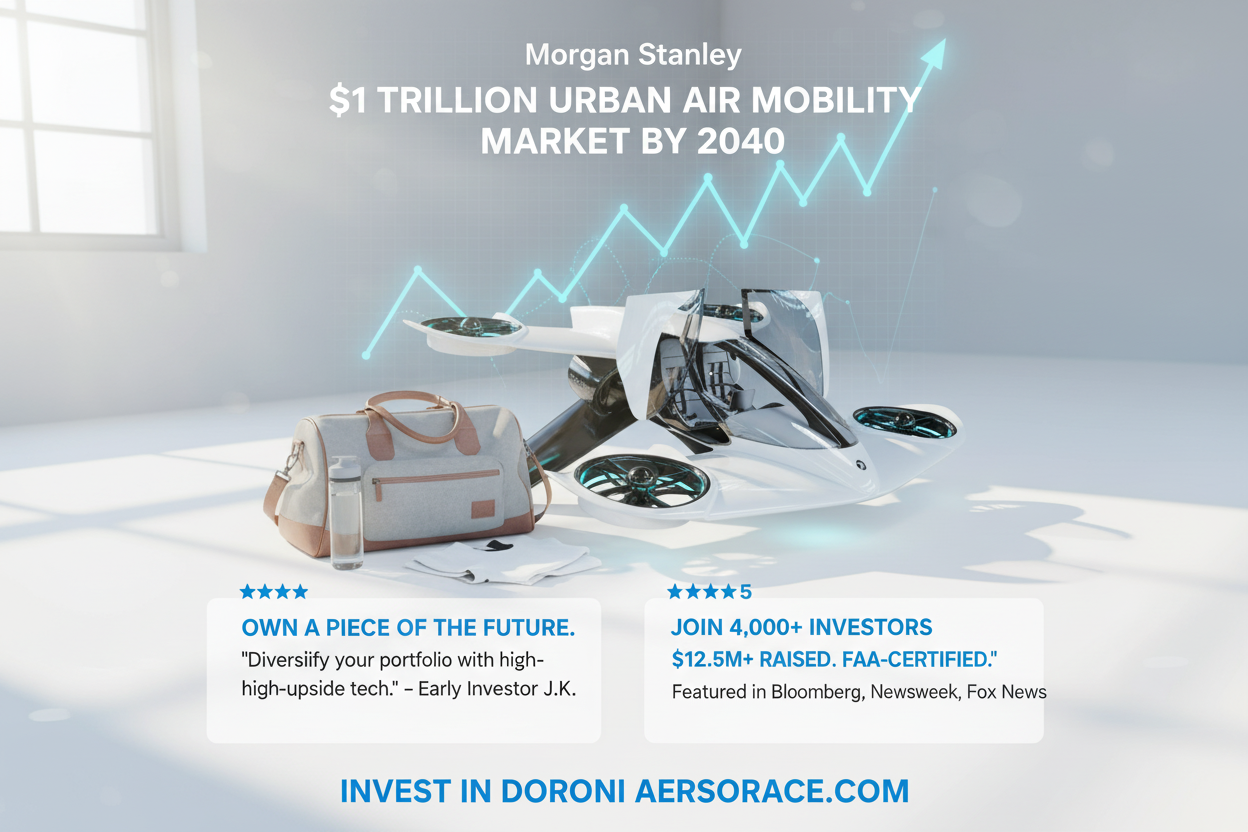
A framework for how we'd build Doroni's marketing machine together — our approach, initial research, and the areas we'll define as a team. This is the starting point, not the final plan.
Before proposing anything, we did our homework. Here's our initial read on where Doroni stands — we'd want to validate and expand on all of this together once we have access to your internal data.
On StartEngine, Doroni was running at 4-5x ROAS — strong performance. Since moving to DealMaker, that's dropped to 2.5x ($400K spent, $1M raised). DealMaker gives you ownership of the funnel — the investor page lives on your domain, you own the data, and you control the experience. But without StartEngine's marketplace discovery, every dollar of investment capital now starts as an ad impression. The first thing we'd want to do together is dig into what exactly changed — was it audience, creative, funnel conversion, or a combination? That diagnosis shapes everything.
From what we can see, Doroni is sending cold ad traffic directly to the invest page. This is a critical missed opportunity. Industry data shows that adding a presell landing page between the ad and the investment page improves cost-per-investor by 3-5x. Direct cold traffic to a compliance-heavy invest page converts at 0.1-0.5%. With a presell page, that jumps to 1-3%. Beyond conversion, the presell page captures emails — and 40-50% of total capital raised in well-run Reg A+ campaigns comes from email nurture, not direct ad conversion. DealMaker explicitly encourages this architecture — they position themselves as the checkout layer, not the persuasion layer. Boxabl used this exact funnel and raised $100M+. This is the single fastest win we'd implement.
This is what makes us different from every other agency or marketing team Doroni could work with. Before we write an ad, build a funnel, or spend a dollar — we build an AI-powered intelligence layer around your brand that every decision flows from.
The Brand Brain is a living AI system that encodes everything about Doroni — voice, positioning, investor personas, competitive landscape, performance data, messaging frameworks, and conversion patterns. It's not a strategy doc that sits in a folder. It's a dynamic intelligence layer that every piece of creative, every ad, every email, and every decision is generated from and measured against. When something works, the Brain learns why. When something fails, the Brain adapts. Every action feeds back into it.
Every ad, email, landing page, and social post speaks with one voice. Not because a brand guide says so — because the Brain generates everything from the same core intelligence. No drift, no off-brand moments, no inconsistency across channels.
The Brain doesn't just store what we've done — it tracks what worked, why, and for which persona. Every future creative decision is informed by a compounding dataset. "This hook converts aviation enthusiasts at 3x the rate of tech futurists" — the Brain knows that.
Traditional agencies make a plan, execute it, then review in 30 days. The Brain operates in real-time — creative performance feeds back immediately, messaging adapts, audience targeting shifts. The system gets smarter every day it runs.
A $45M raise across multiple investor personas on multiple platforms over many months — this is exactly the kind of complex, multi-dimensional marketing problem the Brain is designed for. One system holding the entire strategy, adapting as the raise evolves.
A $45M Reg A+ is not a one-shot campaign. It's a months-long, multi-persona, multi-platform operation where messaging needs to evolve with funding milestones, creative needs constant refreshing, and every dollar spent needs to inform the next dollar. You need a system that learns and performs, not a team that guesses and hopes. The Brand Brain is that system — and everything in this gameplan flows from it.
This is based on publicly available data — your website, social profiles, ad libraries, and press coverage. The real audit happens when we get inside the ad accounts, analytics, and HubSpot together. But here's what stands out already.
Our initial competitive research. We'd want to build a deeper competitive ad intelligence layer together — what ads your competitors are running right now, what's working for them, and where the whitespace is. Here's the high-level landscape.
| Company | Model | Price | Stage | Marketing |
|---|---|---|---|---|
| Doroni H1-X | Personal 2-seat | ~$350-450K | Pre-production | Crowdfunding + PR |
| Jetson ONE | Personal 1-seat | $98K | Delivering | Viral video (48M+ views) |
| AIR ONE | Personal 2-seat | ~$150K | Pre-production | Engineering-focused |
| Joby S4 | Air taxi 5-seat | Service model | FAA cert final | Corporate/institutional |
| Archer Midnight | Air taxi 5-seat | Service model | FAA cert final | Airline partnerships |
Jetson ONE went from unknown to household name with a single viral video. They proved that a flying car sells itself visually — you don't need a $100M marketing budget, you need compelling flight footage and a distribution strategy. Doroni has a superior product (2-seat, faster, longer range) but Jetson has dominated the content game. That changes now.
These are our initial persona hypotheses based on the eVTOL space and crowdfunding patterns. The Brand Brain will refine these using your actual investor data — who's invested so far, what they look like, and what messaging brought them in. These personas will evolve as we learn.
Early adopter. Tesla stock holder. Believes in the future. Wants in early on "the next big thing." Comfortable with crowdfunding platforms.
Private pilot or aviation hobbyist. Understands aircraft. Follows FAA developments. High conviction once sold on technical credibility. Potential future buyer.
Portfolio diversifier. Already invests in startups, crypto, real estate. Evaluates risk/return. Wants data, market size, revenue projections.
Wants to own a flying car someday. Emotionally driven. May also pre-order the H1-X. Responds to lifestyle/freedom messaging. The "Flight is Freedom" audience.
These allocations are based on Reg A+ benchmarks and what we've seen work in investor acquisition. The real split gets defined after we audit your existing ad accounts and see what's already been tested. We'd build this out together and adjust as performance data comes in.
Native ads on finance publisher sites work best when the story is inherently clickable — and "flying car you can invest in" is exactly that. CPCs are cheap ($0.30-$1.50) and the audience reads finance news for a living. Even if direct conversion is lower, native builds massive retargeting pools cheaply — you get thousands of finance-engaged visitors into your pixel for $500-$1,000 in spend, then convert them via Meta/Google retargeting at 40-60% lower cost. The editorial-style presell pages we'd build are literally the format native ads need. Best placements: MarketWatch, Yahoo Finance, Benzinga, Kiplinger, Investopedia.
Creative is the #1 lever. These are the formats and angles we'd want to test first, based on what works in crowdfunding and eVTOL marketing. The Brand Brain will generate these from Doroni's core story — but we need to build that story together with your team first. What assets exist? What footage is available? What's worked before? We'll map all of that.
Doron direct-to-camera. 60-90 sec. Authentic, not polished. The mission, the market, the ask.
H1-X in flight. The single most powerful creative asset in eVTOL. Short-form cuts for every platform.
"I just invested in Doroni and here's why." Real investors sharing their conviction. Builds social proof.
Market TAM, valuation comps, Saudi deal validation. For the analytical investor persona.
"We just crossed $X raised." Countdown timers. Funding progress bars. Drives FOMO.
"Flight is Freedom." Cinematic renders. Future lifestyle. For the dream buyer persona.
Traditional agencies produce 5-10 ad variations per week and guess at what might work. Once we build the Brand Brain together, it generates creative from Doroni's actual story, voice, and data — dozens of variations across hooks, thumbnails, copy angles, and CTAs. As performance data flows back in, the Brain learns which angles convert which personas, and future creative gets smarter. This is what moves ROAS from 2.5x back toward 5x and beyond.
Organic isn't our primary focus — paid drives the raise. But organic content compounds paid performance and we'd want to understand what your team is already doing, what content you have, and where we can amplify. These are the areas we'd explore together.
Factory tours, prototype progress, engineering milestones. Makes investors feel like insiders. 3-5x/week.
Doron on the future of flight, FAA progress, industry commentary. LinkedIn + Twitter. Positions authority.
"$X raised", "X investors", press hits. These get organic sharing and drive FOMO.
"What is Reg A+?", "How the LSA path works", "eVTOL vs helicopter." Reduces friction, builds trust.
Flying car content is MADE for short-form video. Jetson proved this with 48M+ views. Doroni needs to own this format. Flight footage, build updates, founder clips.
Long-form: monthly investor updates, product deep dives, factory tours. Short-form: Shorts repurposed from TikTok/Reels. Build the subscriber base as owned media.
Already the strongest channel. Amplify with employee reshares, investor testimonials, and milestone posts. Doron posting 3-5x/week as the founder voice.
This isn't a single funnel — it's a dual-path system. Every ad dollar can drive both investment AND pre-order pipeline simultaneously. The landing page gives visitors two paths based on their intent, and both paths feed each other.
A single-path funnel (ad → invest page) captures only investor-intent traffic. But many people who see a flying car ad think "I want to buy one" not "I want to invest." The dual-path captures both audiences from the same ad spend. Every pre-order becomes social proof that converts investors. Every investment round's success builds credibility that drives pre-orders. One ad dollar, two compounding outcomes.
Doroni has 600+ pre-orders representing $175M+ in potential revenue. Right now, the pre-order page and investment page are separate experiences. We think they should be one compounding system — because that's exactly how the biggest hardware raises in history worked.
600+ pre-orders × $300K-$400K vehicle price = $175M+ in committed pipeline revenue. That's not a projection — it's real people who put $1,000-$5,000 of their own money down. Every new pre-order driven by ads becomes a data point that converts investors. Every investment milestone drives press that drives pre-orders. This is the flywheel.
325,000 pre-orders in one week ($325M in deposits). Pre-order count became THE metric analysts cited. Stock surged. Subsequent capital raises massively oversubscribed. Pre-orders made the fundraising story.
Solar EV with 40,000+ pre-orders. Raised $40M+ across multiple equity crowdfunding rounds on StartEngine and Wefunder. Closest analog to Doroni — they run the exact dual funnel (pre-orders + equity crowdfunding) from the same marketing.
70,000+ consumer pre-orders + Amazon's 100K-van order. Justified a $77B IPO valuation on fewer than 200 delivered vehicles. The order book WAS the valuation.
~600 aircraft order book was central to their $3.3B SPAC valuation. Doroni has a similar order count in the same sector. The precedent exists for eVTOL specifically.
Right now, every ad dollar goes toward one goal: investment. With the dual funnel, every ad dollar can drive both investment AND pre-orders. Pre-order growth becomes the headline metric on the invest page ("We added 50 reservations this week"). Investor growth becomes credibility that drives pre-orders ("Company backed by 4,000+ investors"). The overlap audience — people who both pre-order AND invest — becomes your highest-value cohort. This is a question we'd want to explore together: how aggressively should Doroni be driving pre-orders alongside the raise?
Retargeting is likely where the biggest ROAS gains are hiding. We'd need to see what pixel audiences exist, what retargeting (if any) is currently running, and build a proper tiered system. Here's the framework we'd propose building together.
Visited doroni.io or invest page but didn't convert. Creative: Founder video addressing common objections. "I know what you're thinking — here's why this is real."
Visited invest page, watched 50%+ of video, or started checkout. Creative: Specific terms, minimum investment, perks. "Still thinking about it? Here's what $998 gets you."
Downloaded investor deck but haven't invested. Custom audiences uploaded from HubSpot. Creative: Milestone updates, progress, new press coverage.
Already invested — encourage upsell and referral. "Your investment is growing. Want to increase your position?" Referral program activation.
Someone watches a YouTube ad → gets retargeted on Facebook. Visits invest page from Google → sees follow-up on Instagram. Downloads the deck via email → sees milestone ads on LinkedIn. The Meta Pixel and GTM are already installed — we connect the dots across every touchpoint.
This is how we see the engagement unfolding. Phase 1 is where we build the Brand Brain and strategy together — no campaigns launch until we're both aligned on the plan. Each phase builds on the last, and we'd review and adjust together at every transition.
This is where we work together most intensively. No ad spend until this is right.
Launch with the strategy we built together. Everything is a test — the Brain starts learning from real data.
This is where the compounding starts. Data feeds the Brain, the Brain improves creative and targeting, performance improves.
More investors → better data → smarter Brain → better creative → lower CPI → more investors. By this point we're operating as an embedded extension of Doroni's team.
Here's what we know, and the benchmarks we'd target. The actual budget, spend levels, and ramp schedule get defined together based on your runway, risk tolerance, and how quickly we can move the ROAS needle in the early phases.
At $333K/month in capital raised, hitting $45M takes over 11 years. At $1M/month it's still 3.75 years. To close a $45M raise in a reasonable timeframe, Doroni needs to be raising $2-4M+ per month at peak. That's 6-12x the current pace. This isn't about incremental improvement — it requires a fundamentally different marketing machine.
| Metric | Current Reality | Phase 2 Target | Phase 3+ Target |
|---|---|---|---|
| ROAS | 2.5x | 4-5x (match StartEngine) | 4-5x sustained at scale |
| Monthly Ad Spend | ~$133K | $200-300K | $400-500K (scale what works) |
| Monthly Capital Raised | ~$333K | $800K-$1.5M | $1.5-2.5M |
| Cost Per Investor | Unknown (est. high) | $150-250 | $80-150 |
| Avg Investment Size | Unknown | $1,500-2,500 | $3,000+ |
| Marketing as % of Capital | 40% | 15-20% | 8-12% |
| Time to $45M | 11+ years | ~30-48 months | 18-30 months |
The goal isn't unrealistic ROAS promises — it's getting back to the 4-5x you had on StartEngine, then scaling spend at that ROAS. At 4-5x on $400K/month, that's $1.6-2M/month raised. Add the pre-order flywheel, email nurture (30-50% of capital in well-run campaigns), and referral loops — and the system compounds. The spend ramp, risk thresholds, and milestone checkpoints get defined together.
These are the metrics we'd propose tracking. The specific targets get set together based on your current baselines (which we'd establish in Phase 1). Everything feeds back into the Brand Brain.
Ad spend, CPC, CTR, landing page visits, investment count. Quick optimization decisions.
Full funnel report: CPI, ROAS, creative performance, email metrics, channel breakdown. Strategy adjustments.
Executive summary: total capital raised, investor demographics, LTV projections, strategic recommendations.
Each funnel shows the complete path: the ad that catches attention, the presell page that builds conviction, and the handoff to invest.doroni.io. Click any asset to view it full-size. Click the presell pages to open the live demo.
Each funnel above is a hypothesis. We don't know which persona converts best, which presell angle drives the highest avg investment, or which ad format stops the scroll until we test. Here's how the Brand Brain turns hypotheses into data-backed decisions:
Run all 3 funnel variants simultaneously. 4+ ad creatives per funnel. The Brain tracks which ad × presell × persona combinations drive the lowest cost-per-investor. Kill losers in 48 hours, scale winners immediately.
Track every step: ad impression → click → presell page → time on page → CTA click → invest page → checkout start → investment complete. Know exactly where people drop off and why.
Performance data feeds back into the Brand Brain daily. "Aviation enthusiasts convert 3x better on the comparison presell." "Dream buyers need 2+ email touches." The system gets smarter, creative improves, CPI drops.
Ad level: Hook angle, image (real H1-X vs lifestyle), format (video vs static), copy length
Presell level: Dark vs white theme, long-form editorial vs short specs-focused, with/without comparison table
Email level: Subject lines, send timing, founder voice vs data voice, CTA placement
Audience level: Lookalike seeds (existing investors vs pre-order list vs site visitors), interest targeting combos
Daily: Pause underperforming ads (<1% CTR after 1K impressions). Shift budget to top 20% performers.
Weekly: New creative batch from Brain informed by last week's data. Presell page A/B test results reviewed. Email sequence open/click rates checked.
Biweekly: Full funnel ROAS review with Doroni team. Strategy adjustments. Brain updated with new learnings.
Monthly: New persona hypotheses. Channel mix rebalancing. Budget scaling decisions.
This framework shows how we think and what we'd bring to the table. The real plan gets built together. Here's what the first steps look like.
Walk through this framework. Understand your goals, constraints, and what's been tried. See if there's a fit.
Deep dive into Doroni together. Build the Brand Brain. Audit everything. Define the plan as a team.
Go live with campaigns we both believe in. Measure, learn, optimize. The Brain gets smarter every day.